Winning at weaning
Winning at weaning
A calf may be thriving on milk, but the real test comes when it is time to go without. Getting the transition right can prevent growth from slipping after weaning.
 Karen Fraser & Stacey Cosnett, Farmlands Technical Specialists
Most calf rearers understand the importance of getting the early stages of calf rearing right. Farmers are increasingly embracing optimum milk-feeding programmes alongside early rumen development, as research continues to demonstrate the benefits of good nutrition during the first 12 weeks of life.
This period is not simply about achieving impressive growth rates; it is when immune function, organ development, skeletal growth, rumen papillae development and gene expression are being established. Yet, despite all that effort, many of the biggest disappointments occur after weaning.
One of the most important lessons is that we are effectively growing two animals at once: the milk-fed calf and the future ruminant. Milk nutrition drives exceptional early growth, but rumen development must occur alongside it.
A calf can look fantastic at eight weeks of age and still possess a relatively immature rumen. Once milk disappears from the diet, that weakness can become obvious very quickly.
This is why early meal intake matters so much. Rumen development does not happen automatically. Calves require access to a high-quality calf meal from an early age. Research has shown that starch fermentation stimulates rumen papillae growth and supports development of the microbial population required for future digestion. By three to four weeks of age, calves are already benefiting from nutrients produced through rumen fermentation.
The goal during the milk-feeding period is not simply to grow calves; it is to grow them while simultaneously building a rumen capable of supporting continued growth once milk is removed.
THE POST-WEANING REALITY
How often have you invested heavily in the first three months, only to see calves suddenly lose momentum? Daily weight gains stall, coats become rough, scours appear, disease challenges emerge or growth simply never reaches expectations, especially in the following three months. Now that optimum milk-feeding rates are commonplace, the inadequacies of many post-weaning rearing programmes are becoming more obvious. With correct supplementation, we can support calves to perform better after weaning without extending the milk feeding period further.
I prefer to reduce milk-feeding volumes gradually over at least two weeks – or, better still, three weeks. This gives a more consistent, gradual shift that supports growth, allows time for rumen microbes to adapt and provides an opportunity to monitor calves that may struggle once the extra support of milk stops.
The term “accelerated growth” is often misleading. What we describe as accelerated is frequently biologically normal growth. Beef calves nursing their dams commonly receive highly digestible milk until six or seven months of age, allowing consistent development of the rumen, immune system, organs and skeleton with very few nutritional setbacks.
Yet, on farms, we often provide the highest quality nutrition for only the first 12 weeks of life, then expect calves to maintain that growth trajectory on pasture alone – pasture that varies daily and often becomes less nutritious during the summer months.
WHY THE SYSTEM CRASHES
Dairy and dairy-beef calves have exactly the same biological requirements as beef calves. Removing milk at weaning does not reduce their need for energy, protein, minerals and other nutrients.
The key challenge is that, by feeding high nutrient levels pre-weaning, the calf’s metabolism and physiological system have been primed to function on that high plane of nutrition. If nutrition drops abruptly, growth can falter while the rumen and microbial population adjust to the new feeding system. This is where many growth setbacks begin.
MANAGING THE TRANSITION, NOT THE CLIFF
That transition off milk should never be treated as a cliff. Milk should be reduced gradually while meal intake is allowed to rise naturally. The objective is simple: do not remove milk faster than the rumen can compensate.
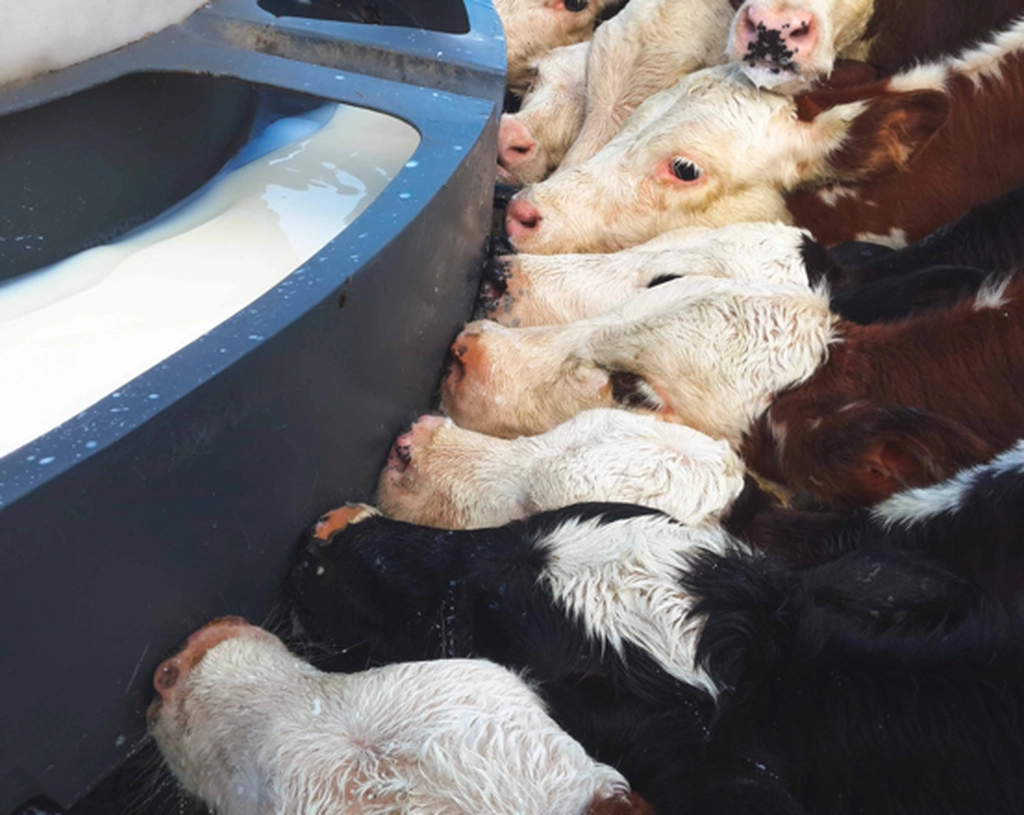
Many rearers assume the challenge is over once calves stop drinking milk. In reality, the following three weeks are often the most important period of all. During this time, the rumen’s microbial population is adapting to a much greater reliance on fibre digestion. Feed intake can fluctuate, nutrient extraction remains inconsistent, and calves become more vulnerable to nutritional stress.
This is where close observation becomes important. Weighing calves two to three weeks after weaning often reveals whether they have successfully made the transition or whether growth has begun to fall away.
LOOKING BEYOND THE WEANING EVENT
However, I think we often focus too heavily on the weaning event itself and not enough on the following three months. The industry often treats calf rearing as the growth phase, and post-weaning as maintenance. The biology says otherwise.
If we support biologically optimal growth through the first 12 weeks of life, we need to maintain that similar trajectory for at least the following 12 weeks as well. We may not target the same gains achieved during peak milk feeding, but growth should remain steady, consistent and uninterrupted.
The goal should never be to grow calves rapidly before weaning and then hope they survive on average-quality feed afterwards, particularly because pasture quality is so heavily influenced by both management and weather.
The first six months of life remain a critical developmental period. Frame size, skeletal development, organ growth, lean muscle deposition and immune function continue to develop rapidly during this stage. Once growth checks occur, it is expensive and difficult to ever recover the lost opportunity.
THE FIRST SUMMER CHALLENGE
This becomes particularly important during the first summer. Weather conditions vary by region – whether excessively wet or dry – and pasture quality often becomes the limiting factor.
Wet conditions can reduce nutrient density and dry-matter intake, while dry conditions frequently create shortages of energy, protein and pasture quantity. In both situations, calves are often expected to grow on feed that does not fully meet their requirements.
Yet these weaned calves remain some of the most biologically efficient animals on the farm. Every kilogram of quality feed consumed can be converted into growth remarkably efficiently. For dairy-beef systems in particular, maintaining growth through the first summer can have major impacts on finishing performance and profitability. A calf that falls behind during this period often carries that setback all the way through the system, sometimes requiring an additional costly winter to finish.
THE ROLE OF CALF PELLETS
This is where calf pellets, used as a balanced supplement, play an important role. They should not simply be viewed as a transition feed used immediately after weaning. In many situations, they are one of the most effective tools available for maintaining biologically optimal growth rates.
Unlike pasture, pellets provide a consistent source of energy, protein, vitamins and essential minerals every day. They also allow farmers to continue supporting rumen development while helping protect calves against coccidiosis during a period when they remain highly susceptible.
As hard-feed intakes increase, however, it is important to consider how much coccidiostat calves are consuming. Monensin remains an effective tool for coccidiosis control, but research and field experience suggest that when higher pellet feeding rates are used around weaning and during periods of summer pasture pressure, excessive monensin intake may reduce dry matter intake and potentially compromise growth performance. This is particularly relevant in systems where calves can, or need to, consume substantially more hard feed.
For rearers seeking a wider safety margin, Reliance Calf Grower 20% and Reliance Calf Finisher 16% contain Deccox® (decoquinate), a non-ionophore coccidiostat with an excellent safety profile in both calves and non-target species.
As supplementary feeding rates increase through weaning and into summer, it is worth reviewing coccidiostat intake levels and discussing the most appropriate option for your system with your Farmlands Technical Field Specialist or your SealesWinslow Nutrition Specialist.
The biggest mistake is allowing calves to experience stop-start growth. Just as farmers would not expect pasture to perform well if it alternated between drought and flooding, calves perform best when growth remains smooth and uninterrupted.
CARRYING THE TRAJECTORY THROUGH
The calf-rearing journey does not end when milk feeding stops. In many respects, the most important phase is only beginning. The transition from milk to a fully functioning rumen, followed by the next three months of growth, is where a significant amount of future performance is either protected or lost.
The goal is not simply to produce a well-grown 12-week-old calf. It is to carry that growth trajectory through to six months, so calves are well set up for the period ahead. Beef calves on their dams show us what biologically normal growth looks like. Our challenge is to replicate that consistency through careful weaning, effective rumen development, quality pasture and, when conditions require it, strategic use of nutrient-dense supplements, keeping calves moving forward every day rather than trying to reclaim lost ground later.


